It is with great sadness that we report that Ward Francillon has passed away since the October meeting. Ward, a former NAWCC National President and wooden works clock enthusiast and expert, will be sorely missed.
Chapter 24 held its October 3, 2004, meeting in the same nice facility as was previously used. After enjoying refreshments and socializing, we started the auction. With many items to be auctioned, the enthusiasm of our auctioneer, Brooks Coleman, was infectious as he dispatched the large number of clocks to new owners.
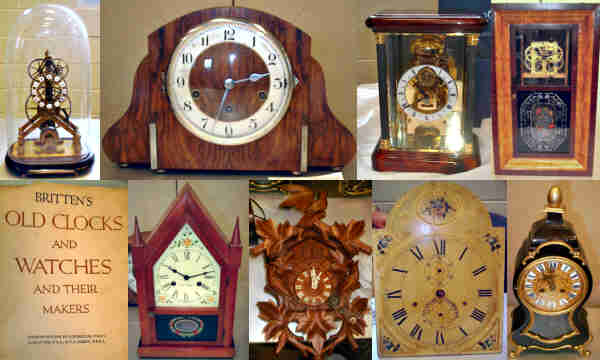
There was an unusual and plentiful amount of clock activity at the Mart as well. Many clocks of all shapes and sizes were on display. A Tourbillion and a Skeleton clock which were on display were reproductions, but still nice clocks.
Mary Francillon shared a preview of photos taken of their wood works, tall case, clock collection. Volunteers had helped to move and set up the collection for a September photo session, which was a great success. Also, a nice Hoadley wood works tall case clock movement was brought for show and tell.
George Waterhouse displayed a George Marsh OG clock that he had rescued from the trash bin and brought back to life from, literally, a box full of case parts and a movement. Our own artist, Rick Mangum, did the reverse painting on the tablet and Kathy Edwards is restoring the dial. The book by Craig Burgess was recommended for those wishing to do case restoration.
The History of Chapter 24 is being updated. Brooks Coleman mentioned that it is currently being worked on and hopes to have the new version ready for the next meeting.
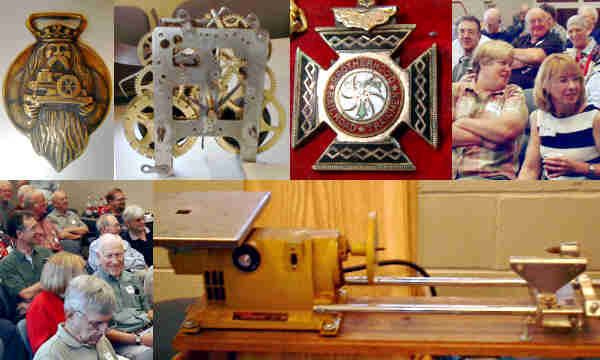
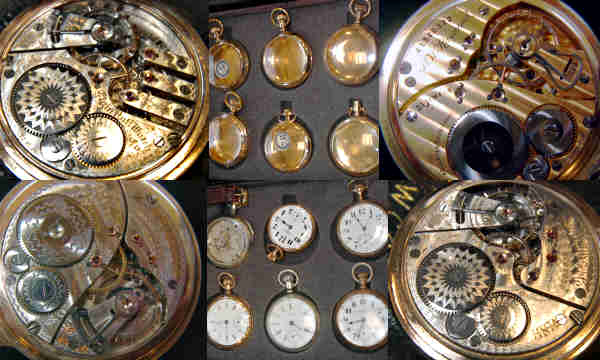
The Watch Focus Group looked at 16-size railroad watches having less than 21 jewels. A 17-jewel Rockford Winnebago showed up, as did an Illinois Bunn grade. Elgin was well represented by a grade 161, 17-jewel, 3-finger bridge movement and a B.W. Raymond grade 370, 3/4 plate watch (see picture). We'll take a careful look at 18-size Swiss watches at the December meeting. These will be higher grade watches, holding the "Swiss Fakes" for another time. We'll follow up in February with 16-size Swiss watches.
Jim and Renee Coulson, from Chattanooga, were guests at our meeting to talk about the National Convention for 2007. They have agreed to co-chair the convention as it will be held in Chattanooga. They are planning ahead and want to have committee chairmen selected by mid-November. All five chapters will need to participate actively to make this the best National ever. They have set up a special e-mail address for communication. It is NAWCC07NAT@comcast.net.
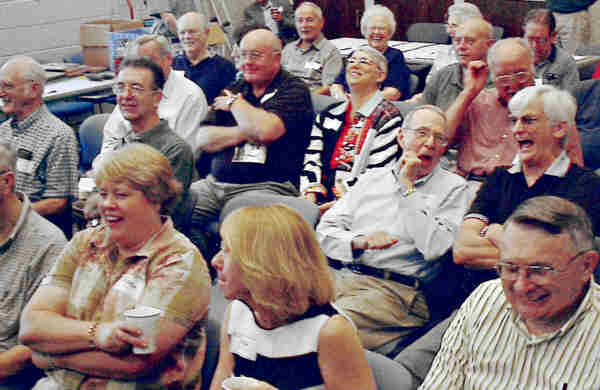
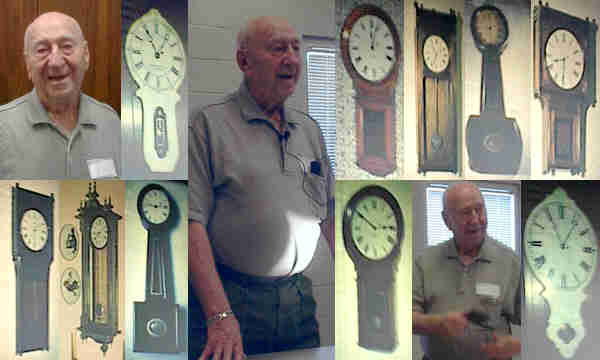
Joe Glass presented a walk through E. Howard history. He gave an interesting and often amusing look into his life and work, believing in the three B's: "B" entertaining, "B" brief, and "B" seated.
Edward Howard lost his father at age 13 and started working to support his family. His first job was fishing for mackerel. Then he worked with a man named Plimpton making iron plows. His third job was in eggs and butter, then again working with Plimpton on scales and balances. Howard then made a scale to weigh gold. Joe said his only flaw was that he wasn’t a great businessman, he was too strict. He was meticulous in everything he did. He apprenticed with the Willards for five years in clockmaking. His cases were perfect and movements were untouched by anyone. Joe remarked that he never repaired a Howard clock for wear. The journey through Howard history included slides of some of the wonderful pieces in Joe’s collection, including a #1 Banjo with a square bottom. It’s the only movement that wasn’t signed E. Howard.